Monday, June 11, 2007

Bwanji zonse!


Bwanji Zonse! Hello Everyone! Things have been extremely busy for me in Chadiza since I wrote back in May. Now that I have oriented myself with the community and with my job roles I have been able to assess some of the needs and begin several projects. Also, I have had some pretty interesting personal and cultural experiences that I know you guys are eager to hear—ONLY I N ZAMBIA!

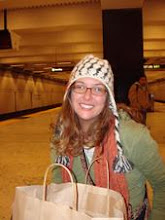
It is the cold season now and yes it does get cold in Africa. The high winds are the major cause of the drop in temperature. At night the air is so cold I wear my good ol’ Western sweatshirt and fleece pants. Then by 9:00 am I am cycling up a huge mountain wiping sweat out of my eyes. I’ve been told July is the coldest month with frost on the ground in the early morning. Hey, one good thing about all the goats sleeping around my house at night is that they might provide some form of insulation! Ha ha! But the afternoon heat continues to be intense..if this is the cold season I am by no means looking forward to the hot season in October. I have made some close friends in the village. My closest friend is Violet Zulu (in the picture above), she is the headman’s daughter-in-law. She is pretty educated (went to grade 10) and can speak English fairly well. Violet is my support system in the village. I eat with her and her family, I go to the fields and garden with her to harvest, she washes my clothes for me, and she fills me in on all the history (or gossip if you will) of the people in the village. I have gotten used to village life. So much so that sometimes I have to stop and say okay if my friends and family could see this right now they would freak out…oh but me, I am used! I can start fires like an Eagle Scout, I can see in the dark like a superhero, I can cycle off-road paths somewhere between Lance Armstrong and Cary Hart, I can make peanut butter like Rachel Ray, and I can build just about anything with a stick and a piece of string like MacGyver!

Plan Banda
In my last letter I told you that I was given a tribal name, Kristena Zulu. I learned from the Chief that Zulu is not a Chewa Tribal name. The name Zulu is actually from the Ngoni Tribe. My Headman’s last name of Zulu comes from his mother’s family. Here in Eastern Province tribal passage is matriarchal; therefore, passage of headman was given to my Headman from his mother’s brother. The Chief insisted I receive a name from the Chichewa Tribe of his Chiefdom. As a result, I am now Agnes Banda! In my village I am still called Kristena Zulu however, in the boma and around the Chief I am called Agnes Banda. For those of you that follow celebrity gossip the name Banda may sound familiar. Banda is the name of the child that Madonna adopted from Malawi. Malawi is only about 30km from Chadiza and we are of the same tribe, the Chewa Tribe. So if all else fails I can come home and be the nanny of Madonna’s adopted child. I mean who else can teach the material baby the language and culture of his tribe? Everyone needs a Plan Banda.

Kill Count Dracula
I am sure you are wondering about the bat that lived in my latrine. Operation Kill Count Dracula was a huge success. After many high anxiety trips to the pit latrine, I couldn’t take the threat of the bat a moment longer. Through a series of bat reenactments and my limited Chinyanja vocabulary, I was able to explain my problem to my Headman. Yeah, that was a morning I will never forget. My Headman speaks deep deep Chewa and I was trained in Lusaka Chinyanja, so our communication is difficult to say the least. Although I didn’t know the words for bat or wings in the local language, I did know the word for rat, choswe. So I said in my botched Chewa something like this…Ku chimbuse, ili yima monga choswe koma ili ndi…um…um …um. (In my toilet, there is an animal like a rat but it has…um…um). Because I didn’t know the word for wings I used my universal sign language and start flapping my arms up and down. I am sure anyone would have gotten a good laugh at me trying to explain ‘bat’ to my Headman. The villagers walking by probably said “Oh, that white one, she has lost her mind.” Once he made sense of my bat pantomime, it was time to discuss an action plan. I was extremely proud of my fluency in the language as I was able to fully explain my carefully plotted plan of Operation Kill Count Dracula! Thanks to my beekeeping group that I meet with every Friday (yeah I will get to that later), I knew the word for smoke. We pulled some of the grass thatch from the roof of my latrine and set it on fire and put it down in the hole and covered the hole with a plank. Bye Bye rat-like birdie! The Operation was a success and I can now “Be Free” in the chimbuse!

Blind Leading the Blind.
During my community entry period I traveled to each school and village within my catchment area to complete sensitization activities. I have 8 GRZ government schools and 6 IRI centers/community schools (like here in this pic). I held meetings in each village to orient myself with the area and the people, meet the village Headmen, sensitize the people regarding Peace Corps and my work in their village, and to share and exchange information about American and Zambian cultures. One day while I was waiting at Kapachi Basic School for the IRI mentor to escort me to his community school 2 km away I met Mr. Michael Banda. Mr. Banda is a highly educated man who attended a school for the blind in a nearby town within Eastern Province. After a lengthy conversation we learned that we were headed to the same village and that our escorts were both extremely late. I had never visited Khalika Village and didn’t know the bush path that would lead me there. And although Mr. Banda walked with a walking stick, the path was too rough for him to travel alone. With a lot of confidence from Mr. Banda and a lot of uncertainties from me, we decided that with the combined efforts of my sight and his knowledge of the village paths we could make it to Khalika together. There could never be a more appropriate time to use the old saying of ‘the blind leading the blind.’ This was it in the truest form. Thirty minutes later, not only had I made it to the village but I had made a friend. The meeting was a success as I was able to listen to the villagers identify their needs and concerns. There were farmers who requested assistance with beekeeping, women who are interested in information on family planning, and those living positively would like to form a support group. After the meeting I began to question my abilities in assisting these villagers. What do I know about beekeeping? How can I assist these villagers if I can’t fluently speak the language? Could I even find my way back to this village alone? I was reassured by my experience with Mr. Banda on the walk back to Kapachi School. I realized that any task no matter how big the challenge can be accomplished as long as you are not walking alone. Mr. Banda is interested in learning more about the culture within America. If anyone is interested in becoming a pen pal or if anyone could connect Mr. Banda with another visually impaired person please let me know.

Got Beans?
I have been very fortunate thus far in my service in regards to my physical health. Other than the expected stomach troubles, I have only been sick once. This particular occasion I thought I might have been experiencing malaria-type symptoms. I had a fever, the chills, body aches, vomiting, and diarrhea…all the signs of malaria. But I didn’t have any mosquito bites nor were the symptoms I was experiencing as severe as the horrifying stories I had heard from other volunteers. The day I was feeling sick my friend and fellow PCV, Micah came to take care of me. She cooked soup and closely monitored my symptoms while keeping the Cortem (malaria medication) nearby. The soup was amazing, potatoes, eggplant, soya, tomatoes, onions, green beans and vegetable cubes…a feast for the village! Sadly I didn’t have much of an appetite. The following day I was feeling better and needed rest so Micah left. Long and not so appetizing story short, there was a lot of left over soup b/c as we all know it is difficult to eat something that you tasted on the way back up the night before. Due to the lack of a refrigerator and any type of electricity for that matter and the fact that I didn’t feel comfortable with the thought of giving the villagers food poisoning, I decided to give the starving dogs in my village my leftovers. I poured the soup on the ground behind my house and called for the dogs. Green beans are not commonly seen or eaten in the village so the dogs devoured everything but wouldn’t touch the beans. In the short amount of time it took me to walk to the front of my house and get my grass broom to sweep the beans away, the curious children had come. I turned the corner and the children were gathered around the dogs’ leftovers. A small girl turned around with a mouth full of green beans!! The children had picked the beans off the ground, the same beans that the dogs had eaten all around and were eating them! What could I do? Who needs to worry about food poisoning from lack of refrigeration? After witnessing this I only worried about all the dirt and dog saliva they had consumed! I guess they have a tolerance for dirt…no children were harmed in the making of this soup.

Traditional Healers
During training I learned of witchcraft, juju and traditional healers from others experiences and stories. Now that I am in the heart of the village I am able to experience this deep cultural belief first hand. These are true stories and the Chewa people truly believe in the power of witchcraft. A woman in my village fell ill. She was feeling weak, dizzy, and experiencing headaches. Her husband took her by ox cart to the neighboring village to the traditional healer. The healer told her that she did not have any blood in her body and that she needed to drink blood. They traveled to the boma and bought a bottle of blood at a shop. She drank the entire bottle of cow blood mixed with milk! Yummy Yummy! Another woman in my village was experiencing headaches and pain in her legs. The traditional healer made small holes on each side of her head and her knees, ankles, and feet, and then smeared black charcoal over the holes.

There are countless stories and many cross-cultural experiences I can’t wait to share with everyone. I am truly happy here and I am learning more about myself with each passing day. I have to challenge and push myself to adapt to the culture and to recognize my strengths as well as my weakness. I miss you all tremendously. I will be back to Chipata July 1st for my vacation to the game park in south Lilongwe about 5 hours from Chipata. I will be taking a safari and seeing The Big Five: elephants, zebras, hippos, cheetahs, and giraffes. We will be camping in tree houses and reportedly the animals roam beneath you at night. So I will be sleeping with the wild African animals! Til next time……
Charlye, Kristena, Agnes

Tuesday, May 22, 2007

Bush Note

Hey you guys! I got a bush note last week and it is too hilarious not to share! Okay so a bush note is just a note that is passed from village to village til it finally somehow ends up in the right hands. So I was impressed b/c the note was written in English but my Headman was upset b/c he couldn't read it. It is village practice for all communication to go through the Headman first before any messages are delivered to people in the village. It was quite funny b/c my Headman had to walk to the school to get a teacher to interpret the letter for him before he came and passed it to me.

Anywho, here it goes:

Charlye Ramsey,

First and Foralmost I would say how are you? You are here informed that there is a club making a kraal for the goats. Come at 08:00 hours and watch what they are doing.

Yours,
Councillor

Too funny! First and for almost! ha ha! Of course I attened b/c as you have read in my previous blogs I HATE GOATS! I really hate them. And I am so glad the villagers are beginning to learn that walking in goat poop is not cool :)

Monday, May 21, 2007

True Life- So this is what it’s really like….

Out with the old and in with the new. For the life of a villager, this can be interpreted in many ways. Some of the things I learned during training I have found as very useful, however, as I quickly discovered, I was living the life of luxury in Chongwe. If I was directly taken from the plane to the bush I am not sure if I would have made it. In retrospect, life was easy during training however at the time, I thought I had been dropped off in the middle of nowhere. Now I really know what nowhere really is. It is biking uphill 10 km to find electricity, but still no luck in finding running water. It is going for days without realizing that you haven’t spoken English. It is waking up at 4:30 am to chickens and goats and pigs and screaming children just to sweep your dirt yard. It is co-habitating with spiders, termites, lizards, frogs and rats. It is going 4 weeks without washing your hair or looking in a mirror. It is cycling 36 km (22.5 miles) in one day. It is attending traditional ceremonies with men wearing headdresses and animal skins. It is living in a village with a polygamist Headman. It is finding 101 uses for a stick. It is craving pizza so much that you dream you are swimming in marinara sauce. Chimate Village is quite a large village. Mufumu (Headman) Chimate is a polygamist. Between himself and his two wives, they have 20 children, 21 counting his newest child, Kristena Zulu – ME! Following Zambian traditions the Headman passed his tribal name Zulu to me. I am not certain where Kristena came from. It is not Christina or Kristen but a ‘Zamblish’ combination of the two. Now I am expected to name the next born child in the village. There is a young girl who is 6 months pregnant and I thought of giving the name Liberty to her child to represent America. Her pregnancy was unplanned and she and the father of the child do not intend to marry. The father and his family were ordered by the Headman to give the girl two cows and 300,000 kwatcha (about $73). Dowries are a common practice in Zambia. I have been asked countless times how many cows my father is requesting for my dowry. I just tell them that I do not know how to cook nsima and they are no longer interested! A man will not marry a woman if she does not know how to prepare their staple food of nsima. Other than being served on a plate, I have not seen any rats (knock on wood). It is harvest season now but I have been told that once the crops are taken from the fields that the rats come in the villages to look for food. So, I have that to look forward to. As of now I have traded my host family rats for pit latrine bats. The bats have taken residency in the depths of my latrine as their bat cave. I have decided that bats are much more terrifying than rats, I mean aren’t bats just rats with wings? Using your imagination, I am certain that you are able to envision why I am much more afraid of bats in my latrine than rats in my house. Peace Corps Medical Office would get a good laugh from a med report that begins with “Well, I was squatting over my pit latrine when…”.

Thursday, May 17, 2007

Things I've Learned in Zambia Part Deux


24. It is much easier to carry things on your head (see Emma).
25. Green bananas and oranges are ripe.
26. It's liberating to go 4 weeks without looking in a mirror.
27. Don't drink village beer, they say it makes you blind! (I think we use the term "beer goggles").
28. All of 1980s Goodwill clothing donations must have been sent to Zambia!
29. Yum-Yum Honey Crunch (peanut better) and SaltyCrax (crackers) are the bomb!
30. Living with spiders, lizzards, and termites isn't that bad, however, I could do without the rats and bats!
31. Villagers give drunk a whole new meaning!
32. As homosexuality "doesn't exist" in Zambia, men walking hand in hand is more acceptable than for men and women.
33. An old plastic container can entertain Zambian children for hours.
34. It's okay to read more than one book a day.
35. Attending 3 hour meetings in a not yet mastered 2nd language gives you plenty of time to make lists of things you've learned!

Tuesday, May 8, 2007

Things I have learned in Zambia

1. Refridgerate After openning is just a suggestion.
2. Laziness is relative.
3. Shaving is overrated.
4. You really only need two sets of clothing.
5. White people really can't dance.
6. College dorms were luxury suites.
7. I can beat anyone in a staring contest.
8. Laughter is a universal language.
9. The 10 second rule doesn't apply here, if it falls on the ground I am eatin' it!
10. Don't worry it willl build your immune system.
11. I hate goats.
12. A bucket of water can go a long way.
13. Save everything, you will use it again later.
14. I could steal candy from a child.
15. Green oranges and bananas are ripe.
16. Twenty six years of proper English instruction can be reversed in two short months.
17. Clear your plate, there really are starving children in Africa.
18. Mail from home is like gold!
19. Soya pieces. Why aren't they big in America?
20. I can sit and do nothing for hours on end.
21. Once you get a fire started you will want to cook all day.
22. Burn everything before throwing it into the trash pit (first see number 13).
23. I really stand out in a crowd, being white and all.

Monday, April 2, 2007

RED-Rural Education Development


What exactly am I doing in Zambia? By popular demand, I will describe to the best of my abilities what my work as a PCV will entail. Overall, my PC work will help to promote sustainable development. PC uses an old proverb to describe its work, which I am sure you all have heard many times before. If you give a man a fish he can eat for a day, but if you teach a man to fish he can eat everyday. The three goals of Peace Corps are (1) to provide trained men and women; (2) share and exchange culture with the people whom you are serving; (3) share your host country culture with those in the states. These goals are great and encouraging b/c if and when you are not as successful in your project as you had hoped to be, you always know that you are continuing to accomplish goals 2 and 3 (which I am doing now!). As the result of current education volunteers’ feedback, the LTM (Learning at Taonoga Market) program has been changed to the RED (Rural Education Development) project. My group is the first to be assigned to this project, so we are the pioneers. Our projects will be fluid in nature as we find what aspects of our project work best with Ministry of Education (MOE) initiatives. My work is not limited to education initiatives. We are encouraged to participate in secondary projects such as sensitizing rural communities on issues surrounding HIV/AIDS, GADZ (Gender And Development in Zambia), WID (Women in Development), Girl Empowerment, Life Skills, Family Planning, IGAs (Income Generating Activities), and any other area identified by the community.

Overview of Zambia MOE—(they LOVE acronyms so get ready!)
Zambia’s education system functions through the Ministry of Education. The MOE operates at the National, Provincial, District and Zonal levels. --- I will be working within the Eastern Province and since I am the volunteer nearest to the BOMA (British Oversees Management Area or town) in Chadiza, Chadiza serves as both my District and Zonal levels (aka Boma volunteer). ---- Each District has a DEBS (District Education Board Secretariat) Office and a DRC (District Resource Center). The DRC serves as a resource for all the schools within the district. Official MOE meetings and trainings are held within the DRC. Within each district there are many zones. Each zone has a Zonal Head School (ZHS), ZRC (Zonal Resource Center) and a Zonal Education Support Team (ZEST). The ZEST is made up of the Zonal Head Teacher (ZH), Zonal In-service Coordinator (ZIC) and School In-service Coordinator (SIC). The main function of the ZEST is to carry out the MOE initiative SPRINT (School Program of In-service for the Term).
Briefly, SPRINT trains, monitors and evaluates curriculum, teaching methodology, student performance, and educational initiatives such as ODL (Open and Distance Learning) and IRI (Interactive Radio Instruction). Within each zone there are GRZ (Government of the Republic of Zambia) schools and community schools. GRZ schools are funded and ran by the government. The community schools are funded and ran by the community. Education in Zambia is not free. All children must pay school fees and although children are not required to wear school uniforms or shoes many children are teased/bullied if they do not. As a result, many children particularly OVC (Orphan and Vulnerable Children) fail to attend school. Another common reason for low attendance or low enrollment numbers is the lack of value for education within the villages. Many families need their children to work in the fields to maintain their family’s welfare. A perfect example of Maslow’s Hierarchy of Needs; one must have their immediate needs such as food, health, and shelter met before they can focus on other areas of need such as education. (I can be easily distracted by my strong opinion in this area so I will remain focused on the topic at hand).

My role as a RED volunteer is two pronged. My focus includes (1) educational initiatives at the District and Zonal Levels and (2) strengthening and/or starting community schools including ODL and IRI initiatives. My main counterparts at the district level will be the DRCC (District Resource Center Coordinator) and the DESO-ODL (District Education Standards Officer of Open and Distance Learning). My main counterparts within the zonal level are the members of the ZEST, the ZH, ZIC and SIC. Within my zone there are many community schools and my main counterparts will be the IRI mentors/teachers and the members of the CSC (Community School Committee). It should be noted that although I am the “boma volunteer,” the boma here in rural Zambia is nothing like what you may think of when you hear ‘boma’ or ‘town’. It is extremely underdeveloped with limited to no resources. So while I will be working with high MOE officials at the District and Zonal Level, I will also be working with community schools within my zone. My village, Chimate, is 10 km from the boma and my district offices however my catchment area quite large. I will serve many GRZ and community schools within my catchment area. One way to promote sustainable development will be to strengthen the communication between the District, Zonal, and Community schools. Linking community schools together to share resources, informing IRI mentors of teacher trainings at the District/Zonal Level, and sensitizing communities on the importance of education are all ways I can promote sustainable development.
(1) Specifics related to my work at the district and zonal level include but are not limited to strengthening the capacity of MOE officials, developing a comprehensive resource center that will provide the teachers a central place to go for classroom materials, to research specific content areas, and to seek support from other educational professionals. I will also work closely with the ZEST team in monitoring and evaluating various projects and initiatives such as SPRINT and SIMON (School In-service and Monitoring). I will also attend teacher trainings and meetings to discuss teaching methodologies, learning styles, and student assessments.
(2) My work within education in the villages include identifying existing community schools and IRI centers as well as identifying any villages which may need to start a community school. Many children have a great distance to travel (20 km or more) to attend the closest GRZ School. Due to these difficulties many children are unable to attend school. For these reasons, it will be important for me to sensitize communities on the importance of education and to encourage them to build a community school. I will work to identify and train a villager to serve as a mentor for the IRI program and to help the school with IGAs to build the school and pay the mentor.

Secondary projects are just as important to my work as RED projects. There has been a strong emphasis on HIV/AIDS and IGAs. IGAs are particularly important for community schools as they provide funding for the mentor salaries and to assist OVCs with school fees, uniforms and materials. Common IGAs include pig farming, school gardens, beekeeping, and other animal husbandries. For the first two months I will be working on community entry projects which include conducting needs assessments, identifying resources through community mapping, completing school profiles, working with my language tutor, identifying and building rapport with a translator and potential counterparts, and getting to know my district and village. During community entry we are strongly encouraged not to leave our village; therefore, I will remain in my village until PC Provincials, which are May 18th.

I hope you now have a better picture of what I will be doing over the next two years. :)

A Taste of Zambian Culture

Over the past two months I have learned a lot about the Zambian culture from my cross-cultural trainings and from living with a Zambian family. Culture and religion are extremely valuable to this Country and it varies across the various regions as well as within the villages. These are brief overviews of what I have either experienced personally or have been told by native Zambians.

Time and Distance. These are two areas, which Zambian and American cultures vary greatly. It took me a while to learn the difference between ‘just now’, ‘now’, and ‘now now’. ‘Just now’ could mean in 10 minutes or 10 hours, ‘now’ is any time from now, and ‘now now’ is for real now. Very similar with distance is the expression ‘Just There’. This is actually one of my favorites and I used is quite often. You will ask a Zambian where anything is and they will ALWAYS respond “It’s just there.” This could mean a few feet away or several km away. You may ask where someone is and you will get “oh, they are just there.” Once again, this could mean they are in the hut next to you or they could be visiting someone in a village 20 km away. As you can imagine, this can lead to great difficulties when you are trying to get directions because EVERYTHING is JUST THERE! I was trying to find ZamChik just last week (its only the best take away in Zambia) and I asked at least 5 people and they all gave me varying directions…. “Turn by the tree and you will see a path”…WHAT!? Do you know how many trees and paths there are? Which tree and which path…who knows? Finally a child escorted me to the best chicken and chips ever…it was worth it! Another common expression related to location is “You will find me just there.” As a sign of respect when you are ending a conversation you tell the person that they will find you and of course it is always just there. In American we learn that time is money and we always try to make the most out of our time. I tried to explain to my host family that Americans can buy precooked and packaged meals that can be cooked in a microwave (yeah that took a lot of explaining). They were even more shocked to hear that we “take our meals’ in our cars. Time is of no virtue to Zambians. When someone comes to visit you it is expected that you stop what you are doing and sit and talk with them, no matter what you are doing. You offer them a seat and usually some food and drink. They may stay and chat about nothing or even sit quietly for hours and hours.

Language and Expressions. I have already told you about some common expressions related to time and distance. Another frequently used expression is “It’s just okay.” How is the n’sima? It’s just okay. How was your day? It was just okay. Fosholo is one of our favorite words in Chinyanja. Its literal translation is shovel but we use it to mean ‘fo sho’…like ‘for sure’. We love it fosholo! Also, Zambians say, “you will be used.” At first I thought they meant that people will use me, but I now know that it means to get accustomed to or to get used to. For example, two nights before I left my home stay family the rats came back. This time I wasn’t nearly as afraid as I was before. My family said, “You are used.” I knew that at the moment I was truly ready for my posting to my village…I was used. I am used to this lifestyle, even the rats.

Witchcraft and Juju. Witchcraft, juju and traditional medicine and healers are quite common. Zambians actually have strong beliefs in their practices. Unlike stories of witches that we are accustomed to hearing witches here do not fly on brooms, they fly in baskets. They are only able to fly naked and at night. There are restrictions on areas in which they can fly called NO FLY ZONES. This is an area in which a more powerful witch resides and if they fly through this no fly zone they will be thrown from their basket. Here is a true story from a man in my village. He said that one Sunday he was walking to church and saw a naked woman laying on the ground. He believed her to be a witch and she was killed. Villagers also believe in juju. A PCV in Eastern told me that a woman in her village unexpectedly died and they believed her death was caused by juju. The family accused the neighbor of putting a juju spell on her. The husband confronted the juju woman and she said yes, she was a witch (it is common in here to admit to a crime even if you did not do it…I don’t know why). The husband then set fire to the woman’s house and she was killed. If a person dies tragically or unexpectedly the villagers have a “flying coffin” ceremony. This is where the coffin is carried around the village after the funeral to find the person that caused the death. Supposedly the coffin directs itself, much like the weegee boards we are more familiar with. The coffin goes to the door of the person that caused the death and the person immediately admits to the crime. Witchcraft and juju is so strongly believed that the innocent truly believe that they must have done it.


Beliefs and Superstitions. Just as in America there are numerous Zambian superstitions however, the different is that here in Zambia they are commonly practiced and truly believed.
-Pregnant women cannot stand in doorways or they will have difficult labor.
-If a man cheats on his wife while she is pregnant the wife or child will die in delivery. If a woman is having difficulty during delivery, the husband is called in and accused of having an affair and the only way the woman or child will survive is if he admits to adultery.
-If a spouse dies, his or her spirit will haunt the living spouse until that spouse has been cleansed. To be cleansed another person within the family (usually a cousin) must have sex with the grieving spouse and that sets the spirit free.
-A woman who is at the moon (menstruating) is not allowed to cook with salt or she will become ill.
-If a young boy as premarital sex, his fingers will grow oddly long.
-It is considered bad luck to ask a woman about her pregnancy.


These stories are just a small taste of Zambian culture. There will be many more to come.